This post may contain affiliate links, which means I may receive a commission from purchases made through the links.
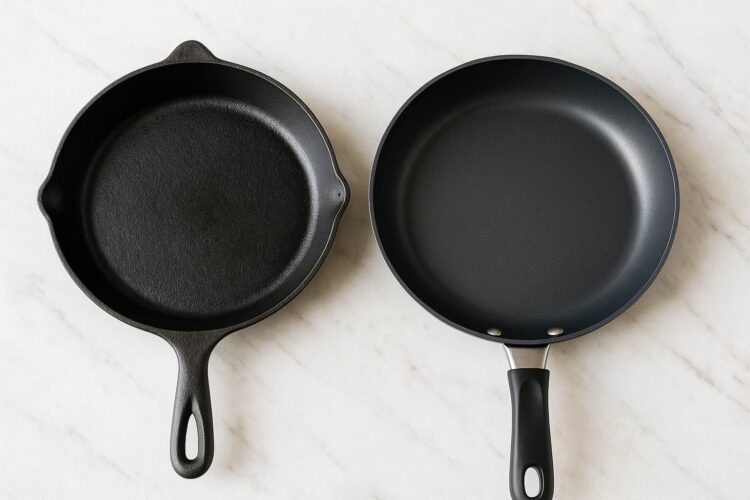
When it comes to choosing cookware, few debates are as sizzling as cast iron vs. nonstick. Both have loyal fans and offer unique advantages in the kitchen, but they also serve very different purposes. Understanding the job, pros, and cons of each can help you pick the right tool for the job, be it frying eggs, searing steaks, or sautéing veggies. In this blog post, we will break it all down so you can decide. I have also included direct links to Amazon in case you get inspired and decide to purchase one of these right away!
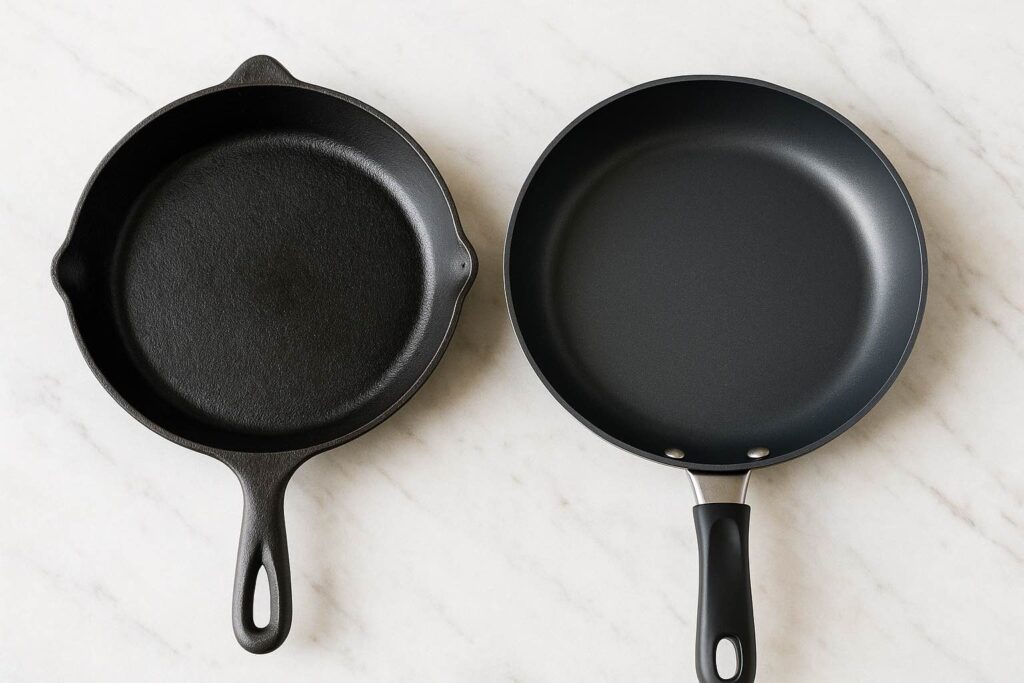
Cast Iron Cookware
Cast iron pans (Commissions Earned) have been around for centuries, and for a good reason. They’re nearly indestructible, excellent at retaining heat, and ideal for high-heat cooking like searing, roasting, and baking. Some of the outstanding pros of cast iron cookware include the following:
- Unmatched heat retention: Once hot, cast iron stays hot. It’s perfect for searing meat and achieving that crispy, golden crust that simply no other cookware can achieve.
- Versatile cooking: You can use cast iron cookware on the stovetop, in the oven, over a campfire, or even on a grill. Now tell me, who doesn’t love that?
- Naturally nonstick (with seasoning): A well-seasoned cast iron pan builds up a nonstick surface over time, and we’re talking chemical-free non-stickiness. The seasoning is all done with regular cooking oil, and when the process is repeated several times, the skillet becomes naturally non-stick!
- Long lifespan: With proper care, cast iron cookware can last for generations. No kidding!
At this point, you might be wondering, “Are you telling me that cast iron cookware is pure perfection with no cons at all?” Of course not. Despite its great qualities, some may point out the following (very few) issues as cons associated with this cookware:
- Heavy: I mean, have you tried lifting that thing? No, not the small ones. The LARGE ones! Cast iron is solid and can be difficult to maneuver, especially when full of food. Problems in this area can be easily avoided, though, by taking extra care when handling cast iron skillets – not filling them to the brim, and of course, always using a nice and strong pair of oven mitts (Commissions Earned) and trivets (Commissions Earned) to protect surfaces.
- Requires maintenance: It needs to be hand-washed and seasoned regularly to prevent rust and to build that non-stick surface we talked about earlier. A little maintenance goes a long way with this cookware, and hey, you get to keep it forever!
- Slow to heat: Cast iron cookware may take some time to preheat, but in all honesty, this is not really a problem. At least not for me, considering it holds that heat exceptionally well.
Overall, cast iron cookware is great at what it does, and that ranges from searing steaks to pan-frying, baking cornbread, and cooking on open flames. Plus, anyone who loves vintage, heavy-duty cookware will love cast iron.
Nonstick Cookware
Nonstick cookware is all about convenience. With its slick surface, it allows for cooking with less oil, and cleanup is always a breeze. Before we dive into the pros of non-stick cookware, here’s an article I published earlier on the five best affordable non-stick cookware brands on Amazon in 2025, which could be super helpful in your selection of cookware on Amazon.
- Effortless food release: Great for eggs, pancakes, and delicate foods that tend to stick to the pan.
- Easy to clean: Most nonstick pans can be cleaned with a quick rinse and a soft sponge. Absolutely no need to get all aggressive with scrubbing (like I do sometimes with this one ‘stick-y’ pot in my kitchen that I can’t seem to get rid of.
- Lightweight: Easier to handle and store, especially for everyday use, compared to the heavy cast iron.
- Healthier cooking: You can use minimal oil or butter when cooking, and your food still won’t stick.
Some cons of non-stick cookware include:
- Limited lifespan: Most nonstick coatings wear out after a few years, especially with frequent use, or if the quality wasn’t premium.
- Heat sensitivity: High heat can damage the coating or release fumes, so they’re not ideal for searing or broiling.
- Scratch risk: Metal utensils and abrasive sponges can damage the surface, shortening its life.
Non-stick cookware remains popular across the world for its great qualities and convenience. From scrambled eggs to omelets, stir-fries, and quick weeknight meals, this cookware is always there to save the day. In purchasing it, though, you have to select carefully, as not all non-stick cookware is made the same. Some even contain toxic chemicals that can be harmful to our health.
Which One Is Right for You?

Choose Cast Iron If You:
- Love bold flavors and crave a deep sear
- Want cookware that lasts a lifetime
- Don’t mind some extra care and weight
- Enjoy oven-to-table rustic cooking
Choose Nonstick If You:
- Prioritize quick cleanup and convenience
- Love to cook low-fat meals with little oil
- Often make delicate dishes like eggs or pancakes
- Want something lighter and easier to handle
Conclusion
Here’s the truth: you don’t have to choose just one. Many home cooks use both cast iron and nonstick cookware, depending on the task. Cast iron excels at high-heat cooking and building flavor over time, while nonstick pans offer ease and speed when you need it most. By understanding what each type does best, you can cook smarter and make every meal a success. So, rather than going for cast iron vs nonstick, use both for a well-rounded kitchen!