This post may contain affiliate links, which means I may receive a commission from purchases made through the links.
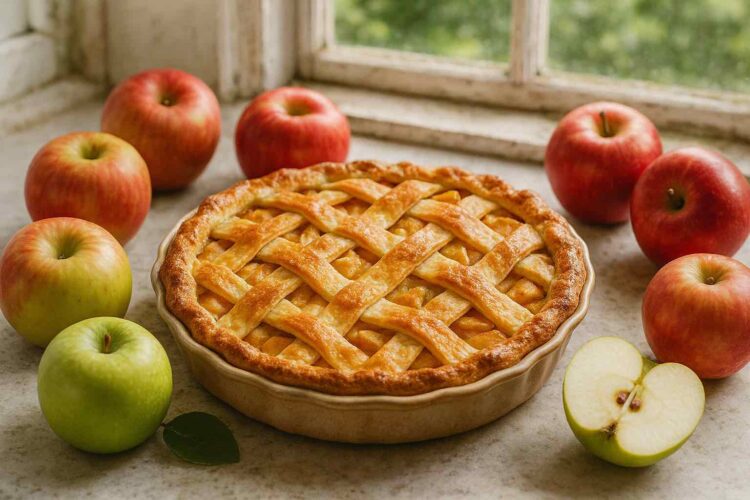
Choosing the right apples for apple pie is crucial for achieving the perfect balance of sweetness, tartness, and texture. The ideal apple should hold its shape during baking, preventing the filling from becoming mushy while still offering a tender bite. Often, a mix of tart and sweet apples creates the best depth of flavor, but using a single variety of apples is equally awesome as long as you choose your apples carefully. Below are the eight best apple varieties for pies and why they are the best choices.
1. Braeburn Apples
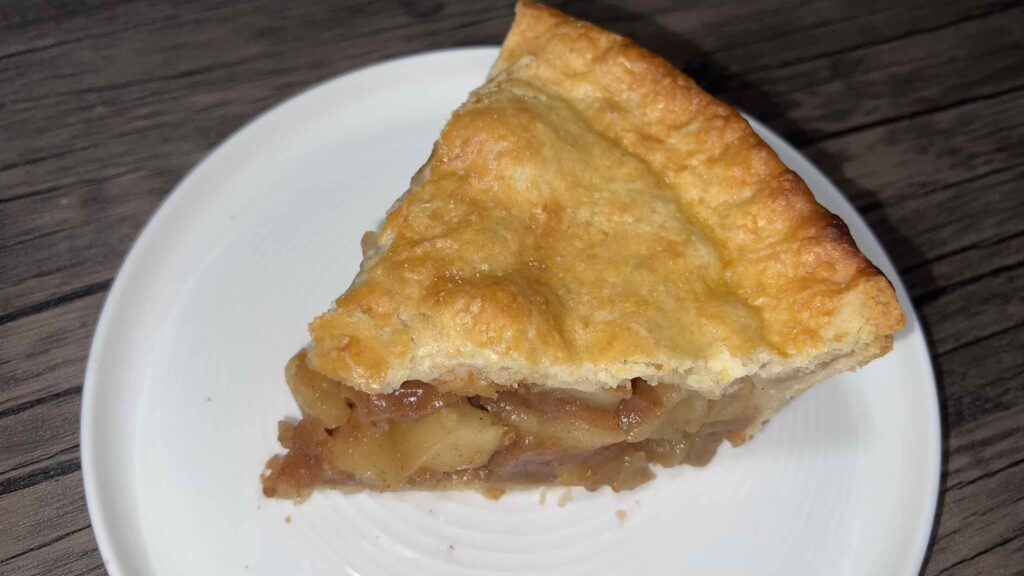
Braeburn apples offer a slight mix of spicy, sweet, and tart flavors, and remain quite firm when baked. These qualities make them the number one choice for baking. Their spiced sweetness with hints of nutmeg and cinnamon naturally enhances the flavors of apple pie. Braeburn apples are a good choice when you want an aromatic and slightly more “mature” pie flavor.
2. Golden Delicious Apples
This apple is a longtime baking favorite for many because of its sweet, mellow flavor and tendency to soften evenly. Golden Delicious gives a gentle, comforting apple flavor without sharp acidity. This apple variety is perfect for pies where you want more sweetness than tang. They can collapse a little when cooked, but still give a pleasant texture if not overcooked. You can combine it with a tart apple that also holds its shape when cooked.
3. Jonagold Apples
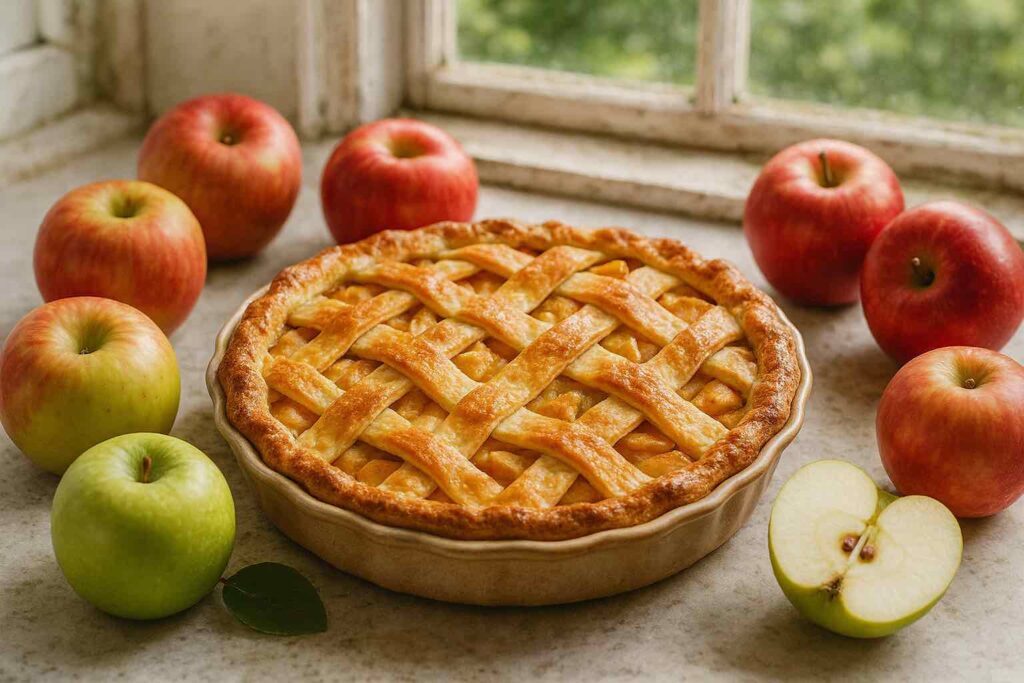
A cross between Jonathan and Golden Delicious, the Jonagold apple balances sweetness and tartness beautifully and holds its shape fairly well in the oven. It brings a complex apple flavor when cooked, including hints of honey and winey tartness, which makes a pie that tastes layered and interesting. Jonagold apples are often less sweet and more tart than Golden Delicious. They also blend well with spices, so a sprinkle of cinnamon and a little bit of nutmeg significantly elevates the flavor of these apples.
4. Fuji Apples
Fuji apples are one of the sweetest apple varieties, making them great for pies without needing as much added sugar. They are also very crisp, meaning they hold up well during baking. for best results, pair them with a tart variety like Granny Smith apples to balance out the sweetness or Jonagold for more depth.
5. Honeycrisp Apples
Honeyscrisp apples are loved for their explosive juiciness and satisfyingly crisp texture. They are naturally sweet but with a nice acid backbone. When baked, honeyscrip apples retain some structure but also deliver a juicy interior. These apples offer a great middle ground for people who like both texture and a softer bite. Because of their juicy nature, you may need a slightly thicker filling or a touch of thickener, like corn starch, to avoid a runny pie.
6. Granny Smith Apples
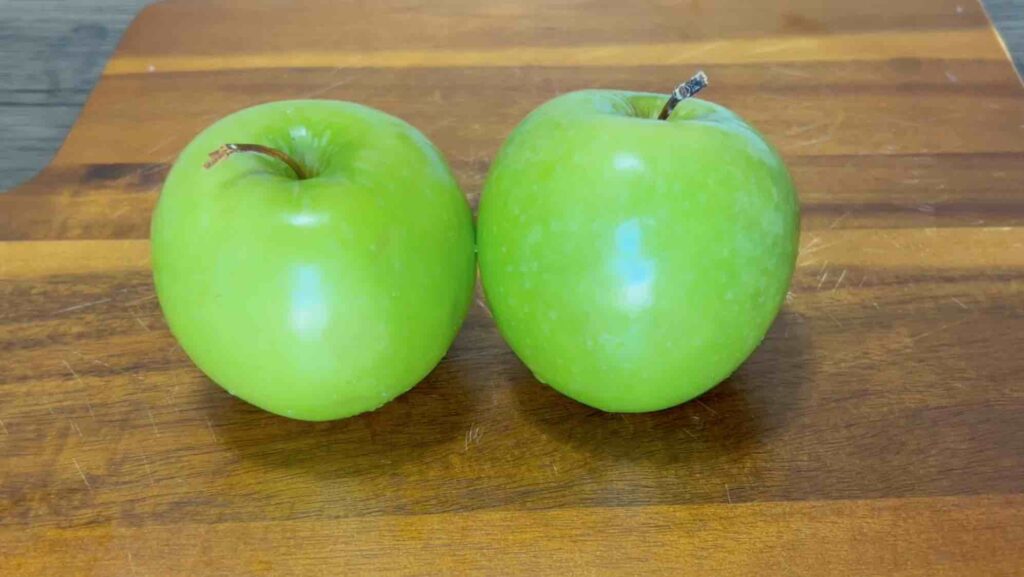
Many people consider Granny Smith the most classic pie apple. Despite its somewhat mushy nature when cooked, the Granny Smith apple variety is so tart that its acidity cuts through sugar and butter, giving your pie a bright, balanced flavor. The Granny Smith apple is especially helpful in heavily spiced or very sweet pies because of its tangy profile. Regarding the shortfall of not holding their shape when baked, alongside extreme tartness, you can combine these apples with a sweeter and firmer variety for the best results.
7. Pink Lady Apples
Pink Lady apples are crisp and have a lively, sweet-tart flavor with aromatic notes. They hold shape pretty well and add brightness and complexity to a pie. However, they aren’t quite as widely used as the top choices because their flavor can be more floral or slightly perfumed. Of course, this is something that some bakers love. But, if you’re looking for a more classic pie, you might want to pick one of the earlier varieties.
8. Cortland Apples
Cortland is a descendant of McIntosh with slightly firmer flesh and a tart-sweet balance compared to McIntosh apples. The Cortland apple browns less when cut, which is handy when prepping. Also, it holds up reasonably well in pies while producing a soft-but-not-mushy texture. Cortland is often a baker’s choice when going for more tender, almost melt-in-your-mouth pies.
Pro Tips for Getting the Best Pie from Your Apples
- Mix for balance. Many bakers combine apples; typically a tart one like Granny Smith with a sweet and juicy one like Honeycrisp or Golden Delicious, or a flavorful one like Jonagold. This gives structure, flavor, depth, and pleasant texture.
- Cut size matters. Cut your apple slices thicker and larger. Thicker slices of half an inch or so hold shape better, while thinner slices will soften more and reduce “bite.”
- Use a thickener if needed. Juicy apples like Honeycrisp and Fuji can make pie fillings runny. A tablespoon or two of cornstarch per 6 to 8 cups of sliced apples usually helps. Some bakers will pre-cook and thicken the apples to reduce the juices.
- Mind the spice pairings. The classic pie seasoning is cinnamon plus nutmeg. For brighter apples like Granny Smith and Pink Lady, you can also add a little lemon zest or cardamom. For sweeter apples like Honeycrisp and Golden Delicious, a pinch of allspice can complement them well.
- Don’t over-sugar them. Taste your apples raw before you decide how much sugar to add. Apples vary widely in sweetness. If using a very sweet apple like Golden Delicious, reduce the sugar.
- Finish with acid if needed. For sweeter and non-tart apples, adding a tablespoon of lemon juice or apple cider vinegar helps brighten flavors and round out sweetness.
- Texture preference vs apple choice. Your preferred texture of the pie should dictate which apples you use to make it. As I have pointed out above, these best apple varieties for pies vary from firm to somewhat mushy, and you have the flexibility to mix the apples as well.
Conclusion
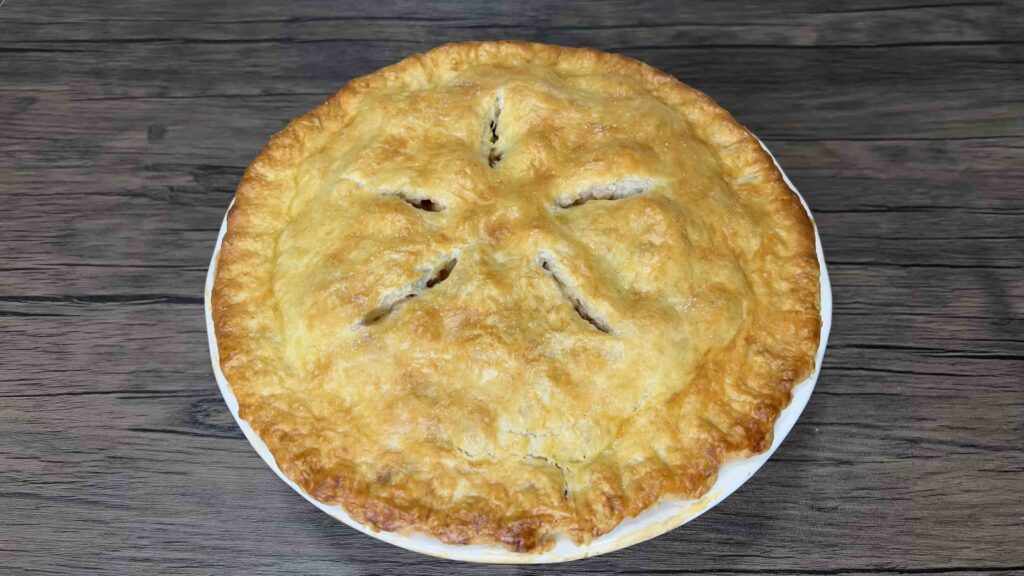
There’s probably no single apple variety that is number one for all bakers. Different choices of apples create different pies with varying and sometimes overlapping profiles. My best advice? Experiment! Try a single-variety pie to taste its character, then try blends to hit your favorite texture and flavor. Once you find your signature combo, you’ll be baking pies that people not only compliment but also fight over the last slice of.