This post may contain affiliate links, which means I may receive a commission from purchases made through the links.
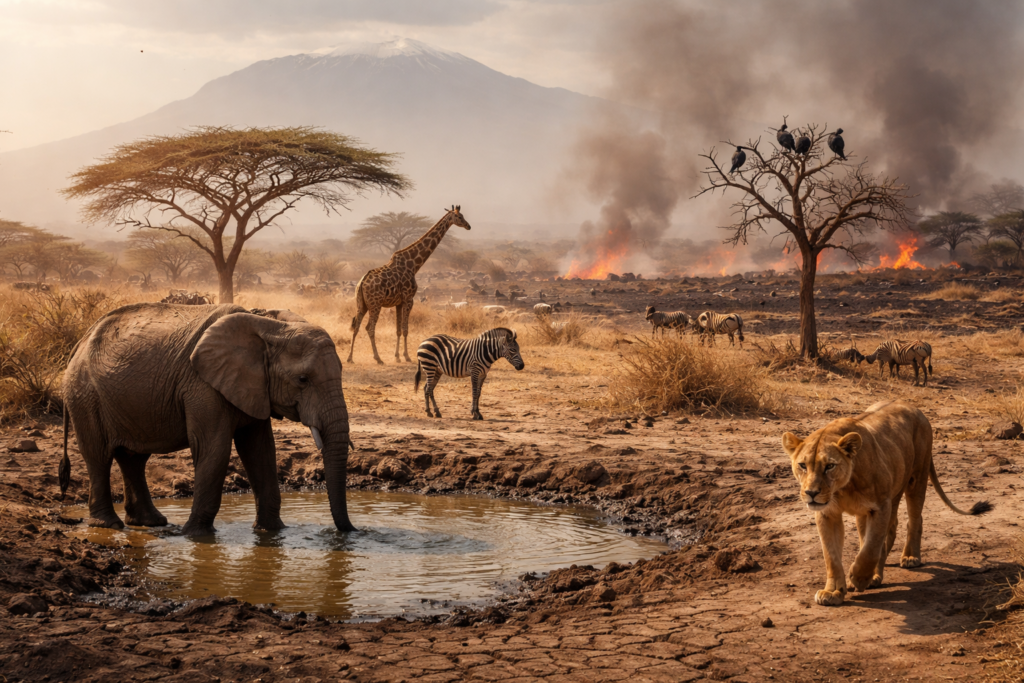
Kenya is one of Africa’s most celebrated wildlife destinations, home to iconic landscapes and species that attract visitors from around the world. However, climate change is increasingly threatening this natural heritage, altering habitats, disrupting ecosystems, and putting immense pressure on wildlife. These changes are not just environmental; they are deeply interconnected with human livelihoods, tourism, and conservation efforts across Kenya.
Changing Weather Patterns and Prolonged Droughts
Climate change has made rainfall patterns in Kenya far less predictable than in the past. Traditionally, communities and wildlife relied on relatively stable wet and dry seasons, but today, prolonged droughts are becoming more frequent and severe. These extended dry periods drastically reduce water availability and dry up grazing lands, leaving herbivores with little to feed on. As water sources shrink, animals are forced to travel longer distances in search of survival, expending more energy and increasing their vulnerability to exhaustion and disease. In some regions, entire herds have been lost during extreme drought events, highlighting just how devastating these changes can be.
Habitat Loss and Ecosystem Degradation
As climate conditions shift, many of Kenya’s ecosystems are gradually degrading. Grasslands that once supported large herds are becoming less productive, wetlands are shrinking, and forests are facing increased stress due to reduced rainfall and rising temperatures. This loss of habitat directly affects wildlife populations by reducing the availability of food, shelter, and breeding grounds. In areas like Amboseli National Park, changes in water availability have altered the delicate balance of the ecosystem, impacting elephants, buffaloes, and other species that depend on wetlands. Over time, such degradation can lead to declining biodiversity and the disappearance of certain species from affected areas.
Impact on Migration Patterns
Migration is one of the most important survival strategies for wildlife in East Africa, allowing animals to follow rainfall and access fresh grazing lands. However, climate change is disrupting these natural cycles. The world-famous migration between Serengeti National Park and the Maasai Mara National Reserve depends heavily on predictable rainfall patterns. When rains are delayed or inconsistent, the timing and routes of migration can shift dramatically. This not only affects the survival of herbivores like wildebeest and zebras but also impacts predators such as lions and hyenas that rely on them for food. Disruptions in migration can therefore ripple through the entire ecosystem.
Increased Human-Wildlife Conflict
As natural habitats shrink and resources become scarce, wildlife is increasingly coming into contact with human populations. Animals searching for water and food often venture into farms and settlements, leading to conflicts. Elephants may destroy crops, while predators like lions and leopards may attack livestock. In regions surrounding Tsavo National Park, such conflicts have become more frequent and intense. This creates tension between conservation efforts and local communities, who may suffer economic losses as a result. Addressing human-wildlife conflict is now a critical part of conservation strategies, requiring innovative solutions that protect both people and animals.
Threats to Water-Dependent Species
Water ecosystems are among the most vulnerable to climate change, and their decline has serious consequences for wildlife. Lakes, rivers, and wetlands are experiencing fluctuations in water levels, which disrupt the delicate balance of aquatic ecosystems. In Lake Nakuru National Park, changing water levels and salinity have affected the availability of algae that flamingos depend on, leading to fluctuations in their populations. Similarly, animals like hippos and crocodiles that rely on stable water sources are facing increased stress. When these ecosystems are disrupted, the impact extends beyond individual species to the entire food chain.
Effects on Breeding and Survival Rates
Climate change is also interfering with the natural breeding cycles of many wildlife species. Successful reproduction often depends on specific environmental conditions, such as the availability of food and water. When these conditions are disrupted, breeding success declines. For instance, if rains arrive too late or are insufficient, there may not be enough vegetation to support pregnant animals and their young. This can lead to higher mortality rates among newborns and weaker overall populations. Over time, reduced breeding success can significantly impact the long-term survival of certain species, especially those that are already vulnerable.
Rising Temperatures and Heat Stress
Increasing global temperatures are placing additional stress on wildlife in Kenya. Extreme heat can affect animals’ behavior, forcing them to seek shade during the day and become more active at night. While this adaptation may help them survive, it can also limit their access to food and water. Prolonged exposure to high temperatures can lead to dehydration, heat stress, and even death, particularly among young, old, or sick animals. These temperature changes are subtle but powerful, gradually reshaping how wildlife interacts with its environment.
Impact on Bird Species
Birds are highly sensitive to environmental changes, making them important indicators of climate change. In Kenya, both resident and migratory bird species are being affected by shifting weather patterns. Changes in rainfall and temperature can alter migration timing, disrupt breeding cycles, and reduce food availability. In ecosystems like Lake Naivasha, climate-related changes are affecting bird habitats and the insects and plants they depend on. While some species may adapt to new conditions, others may decline or disappear if changes occur too rapidly.
Conclusion
Climate change is reshaping the natural world, and Kenya’s wildlife is at the forefront of this global challenge. From prolonged droughts and habitat loss to disrupted migration patterns and increased human-wildlife conflict, the impacts are wide-ranging and deeply interconnected. However, there is still hope. Through strong conservation efforts, community involvement, and global awareness, it is possible to protect the rich biodiversity of Kenya. Safeguarding Kenya’s wildlife is not just about preserving animals. It is about protecting ecosystems, supporting livelihoods, and maintaining a natural heritage that belongs to the entire world. With continued effort and commitment, future generations will still have the chance to witness the beauty and wonder of Kenya’s wildlife in its natural habitat.